Have you ever spent hours worrying about something you couldn’t change?
Maybe you stressed about the economy, other people’s opinions, a mistake from the past, or a situation at work that felt completely out of your hands. Most people do this without realizing how much energy it drains.
The problem is not that we care too much. The problem is that we often focus on things we cannot control instead of the things we can.
This is where the Circle of Control becomes a powerful tool.
The Circle of Control is a simple concept that helps you separate what you can control from what you cannot. It encourages you to spend more time and energy on actions that can make a difference and less time worrying about things outside your influence.
The idea became popular through Stephen Covey’s work in The 7 Habits of Highly Effective People. Today, it is widely used in personal development, mental health, leadership coaching, education, and productivity training.
In this guide, you’ll learn what the Circle of Control is, how it works, how it differs from the Circle of Influence and Circle of Concern, and how you can use it in everyday life to reduce stress and make better decisions.
What Is the Circle of Control?
The Circle of Control represents the things you have direct control over.
These are areas where your actions, choices, and behaviors can create an immediate impact.
Examples include:
- Your attitude
- Your habits
- Your effort
- Your words
- Your reactions
- Your daily choices
- Your goals
- How you spend your time
Many people feel overwhelmed because they spend too much time focusing on events they cannot change.
The Circle of Control helps redirect attention toward productive action.
Simple Definition
The Circle of Control is a mental framework that helps you focus on things you can directly change instead of worrying about things outside your control.
This simple shift often leads to lower stress, better focus, and improved emotional well-being.
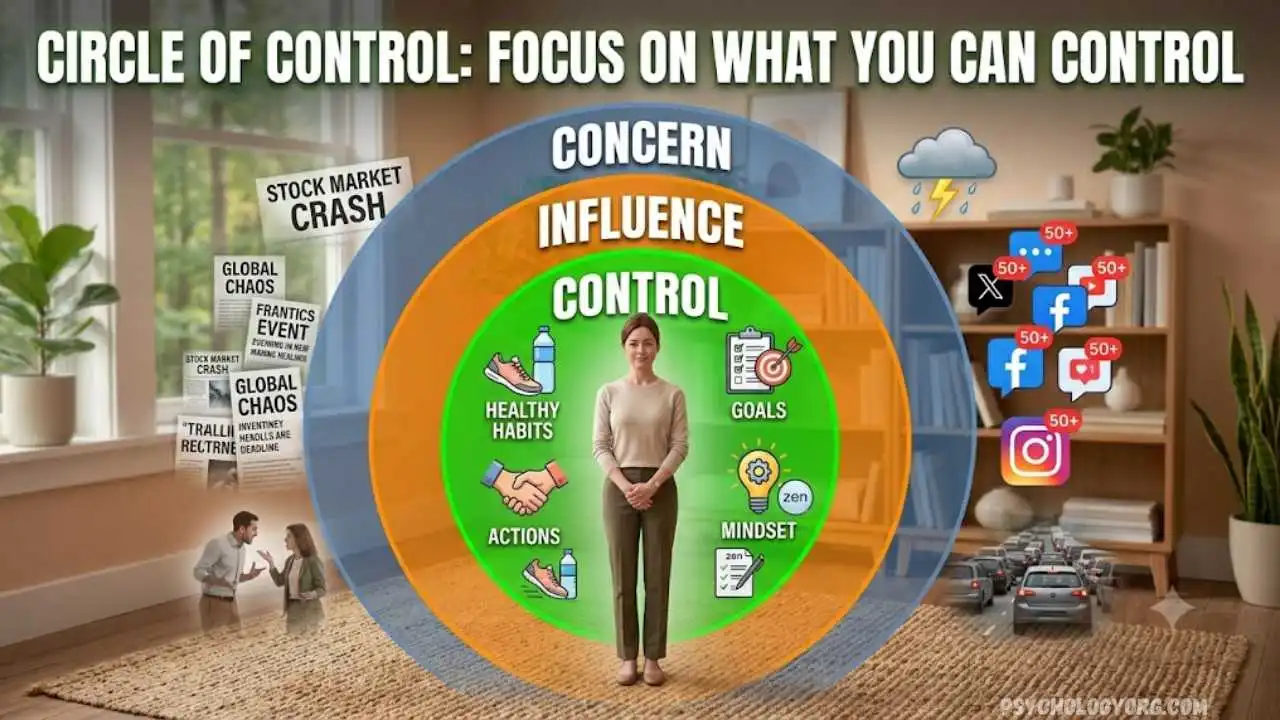
Circle of Influence, and Circle of Concern
One of the most important parts of this concept is understanding the three circles.
Circle of Control
This inner circle contains things you can directly control.
Examples:
- Your behavior
- Your decisions
- Your mindset
- Your work ethic
- Your responses
Circle of Influence
The next circle includes things you cannot fully control but can influence.
Examples:
- Team decisions
- Family discussions
- Workplace culture
- Customer relationships
- Children’s behavior
You cannot force outcomes, but your actions may affect them.
Circle of Concern
This outer circle includes things you care about but cannot control.
Examples:
- Politics
- Weather
- Global events
- Economic conditions
- Other people’s opinions
- Past events
These topics often consume attention without giving you much power to change them.
Why This Matters
People who focus primarily on their Circle of Concern often feel stressed, frustrated, and powerless.
People who focus on their Circle of Control tend to feel more productive, confident, and resilient.
Stephen Covey’s Circle of Control Explained
Stephen Covey introduced these circles to help people become more proactive.
According to Covey, highly effective people focus their energy where they can make the greatest impact.
Instead of asking:
“Why is this happening to me?”
They ask:
“What can I do about this?”
This shift may seem small, but it changes how people approach challenges.
For example:
Imagine you are unhappy about a difficult coworker.
You cannot control the coworker’s attitude.
However, you can control:
- How you communicate
- How you respond
- Whether you set boundaries
- Whether you seek support
By focusing on what you can control, you move from frustration to action.
Benefits of Focusing on What You Can Control
Reduces Stress and Anxiety
Much of our stress comes from trying to manage situations that are beyond our control.
When you focus on controllable actions, your mind becomes calmer and more solution-focused.
Improves Productivity
Energy spent worrying is energy not spent acting.
The Circle of Control helps direct attention toward meaningful tasks and goals.
Builds Confidence
Every time you take action within your control, you strengthen your sense of personal responsibility and confidence.
Improves Decision-Making
When distractions are reduced, it becomes easier to identify practical next steps.
Supports Mental Health
Many therapists and coaches use Circle of Control exercises because they help clients feel less overwhelmed during difficult situations.

Things I Can Control vs Things I Cannot Control
One of the easiest ways to understand this concept is through examples.
Things I Can Control
- My attitude
- My effort
- My choices
- My daily habits
- My communication
- My priorities
- My reactions
- My personal goals
Things I Cannot Control
- Other people’s actions
- The weather
- The past
- The economy
- Social media opinions
- Traffic
- Unexpected events
When faced with a challenge, ask:
“Is this inside my Circle of Control?”
If the answer is no, shift your attention toward actions that are within your control.
How to Use the Circle of Control in Everyday Life
At Work
Imagine your company announces major changes.
You cannot control management decisions.
You can control:
- Your performance
- Your communication
- Learning new skills
- Preparing for opportunities
In Relationships
You cannot control another person’s feelings or choices.
You can control:
- How you communicate
- How you listen
- Your boundaries
- Your behavior
During Stressful Events
When facing uncertainty, create two lists:
What I Can Control
What I Cannot Control
This simple exercise often provides immediate clarity.
For Students
Students cannot control every exam question.
They can control:
- Study habits
- Time management
- Preparation
- Sleep schedule
Focusing on these areas often leads to better outcomes.
Circle of Control Worksheet Exercise
One of the most effective ways to apply this concept is through a simple worksheet.
Step 1: Draw Three Circles
Create:
- Circle of Control
- Circle of Influence
- Circle of Concern
Step 2: List Current Worries
Write down everything causing stress or frustration.
Examples:
- Job uncertainty
- Family conflict
- Financial concerns
- Health goals
Step 3: Categorize Each Item
Ask:
- Can I directly control this?
- Can I influence this?
- Is it completely outside my control?
Place each item in the appropriate circle.
Step 4: Create an Action Plan
Focus only on actions inside your Circle of Control.
For example:
Instead of worrying about getting promoted, focus on:
- Improving skills
- Completing projects
- Building relationships
- Seeking feedback
This creates momentum and reduces helplessness.
Common Mistakes People Make
Confusing Influence With Control
Many people try to control outcomes that they can only influence.
For example, parents can influence their children’s choices, but they cannot control every decision.
Ignoring Legitimate Concerns
The goal is not to stop caring about important issues.
The goal is to stop spending excessive energy on things you cannot change.
Using the Circle of Control as Avoidance
Focusing on your own actions does not mean ignoring responsibilities or difficult conversations.
Instead, it means approaching them from a place of action rather than worry.

Conclusion
The Circle of Control is simple, but its impact can be powerful. When you stop spending energy on things you cannot change and start focusing on what you can control, life often feels more manageable. You make better decisions, experience less stress, and gain a stronger sense of personal responsibility.
The next time you feel overwhelmed, pause and ask yourself:
“What is within my Circle of Control right now?”
Then take one small action. You may be surprised how much progress starts with that single question.
As a next step, try creating your own Circle of Control worksheet or exploring related guides on stress management, mindfulness, and emotional resilience to strengthen this skill even further.
Ready to take the next step in your personal growth? Explore expert services — from therapy to life coaching — available on Fiverr.
If you want to read more articles similar to Circle of Control: Focus on What You Can Control, we recommend that you enter our psychology category.
FAQs
What is the Circle of Control?
The Circle of Control is a framework that helps people focus on things they can directly control, such as their actions, thoughts, habits, and responses, instead of worrying about things outside their control.
What is the difference between the Circle of Control and the Circle of Influence?
The Circle of Control includes things you can directly change. The Circle of Influence includes things you may affect but cannot fully control, such as other people’s decisions.
How does the Circle of Control reduce stress?
It reduces stress by shifting attention away from uncontrollable events and toward actions that create meaningful progress and positive outcomes.
Who created the Circle of Control concept?
The concept became widely known through Stephen Covey and his book The 7 Habits of Highly Effective People, where he discussed the Circle of Concern and Circle of Influence.
Can the Circle of Control improve mental health?
Yes. Many therapists, coaches, and mental health professionals use Circle of Control exercises to help people manage stress, anxiety, and feelings of overwhelm.

I’m Waqar Hasan, a passionate psychologist and dedicated content writer.
With a deep interest in understanding human behavior, I aim to share insights and knowledge in the field of psychology through this blog.
Feel free to reach out for collaborations, queries, or discussions.
Let’s dig into the fascinating world of psychology together!