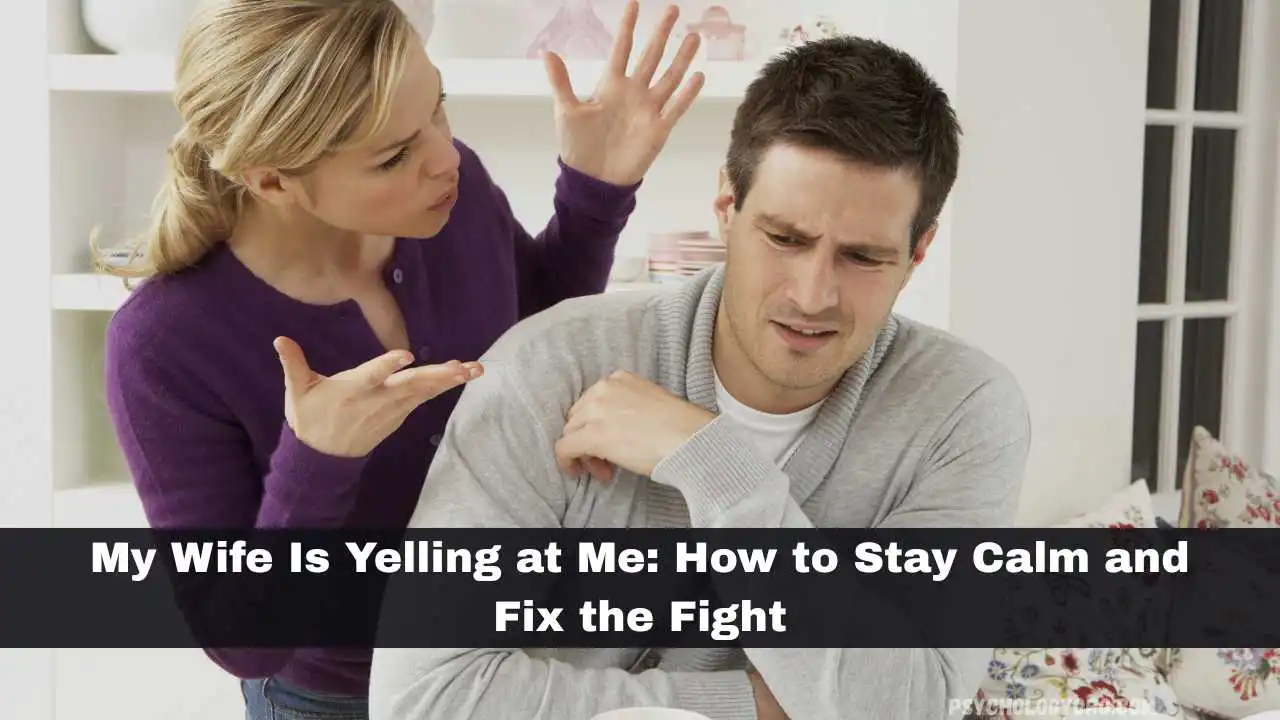
When my wife is yelling at me, it feels awful and scary inside. Maybe your chest feels tight, or your mind starts zooming. You might want to yell back, or you might just freeze and shut down. Either way, it usually makes the fight bigger.
This guide is here to show you some small, simple steps that really work. First, we learn to calm our bodies. Then, we practice listening with real care. Last, you pick one tiny fix to do right away. Doing this over time helps build trust and makes your home feel safe and nice again.
What to Do When my wife is yelling at me
When you feel your wife is yelling at you, remember this simple order: Safety, Care, and then Plan. Your first job is to keep things safe by keeping your voice low and your words short.
End with a Kind Line
No matter what you still disagree on, end the conversation with a repair line. Say, “I’m sorry for my tone,” or “Thank you for telling me what you need.” This repair phrase keeps the important connection and bond between you strong, even when the disagreement is not fully solved.
Breathe Slow and Quiet
The first thing to do is calm your own body. Sit down or stand with your feet flat on the floor, like a tree. Unclench your hands and drop your shoulders. Now, breathe! Breathe in slowly for four counts and out for six counts. Do this five times.
This slow breathing is like hitting the “off” switch on your body’s stress alarm, which lets your thinking brain take over.
Soften Your Voice and Face
Try to speak even softer and slower than you usually do. On your face, relax your mouth and the area around your eyes. This calm body language is very important because it tells your wife, and your own mind that you are not attacking. This often helps lower the volume for both of you.
Show You Care First
Before you try to fix anything, say just one kind, short line. Something like, “I want to hear you,” or “You matter to me.” This shows that your relationship is more important than the fight. When people feel safe and cared for, they naturally start to calm down, and only then can they have a real, helpful conversation.
Use ‘I-Statements’
Focus on what is happening inside you. Use “I-statements” to say what you feel and what you want. For example: “I feel tense right now,” or “I want us to be okay.” It’s important to never use blaming words like “You always…” or “You never…” because blame just pours gas on the fire.
Ask for a Quick Break the Right Way
If things are too hot, you can ask for a pause, but you must do it correctly. Say, “I need ten minutes to calm down. I will come back at six twenty.” Giving a clear return time proves that you are taking a pause to protect the talk, not to run away from it. You must always keep your word and come back when you said you would.
Keep Safe Space
Give your wife a little space. Do not stand between her and a doorway, and do not point your finger. Keep your hands open and visible. If you can sit, sit down. Your posture and body should always look safe and relaxed, not big, threatening, or angry.
Skip the Small Facts Right Now
In the heat of the moment, do not start arguing about little details like what day something happened or exactly how much money was spent. When someone is very emotional, their brain ignores facts. You need to save all those small details for later, after both of you have had time to calm down.
Say Back What You Heard
To show you truly listened, repeat the main feeling or need you heard. Try saying: “It sounds like you felt really alone when you needed help. Is that right?” Let her answer that question. When a person feels like they have been truly seen and heard, they stop needing to shout to get their point across.
Ask One Clear Question
After listening, ask one simple, focused question: “What is the most important thing for you right now?” After you ask it, you must stop talking and listen to her full answer. Don’t interrupt, and don’t rush to fix the problem right away.
Do One Tiny Fix Today
Pick just one small thing you can do right now to help with the problem. This could be something simple like setting a reminder on the phone, starting the dinner you forgot, or folding the clothes on the sofa. Small wins like these help lower stress immediately and start rebuilding trust.
Protect the Kids and Home
If children are in the area, it is your job to stop the hard part of the argument. Quiet your voice right away and say, “We will talk about this later.” Move the private discussion to a private time. The home needs to feel like a safe and secure place for everyone.
Why Fights Get Loud at Home
Big fights don’t just appear out of nowhere. Most of the time, stress and small problems build up over time. When that pile gets too high, even a tiny spark can cause an explosion. The reasons below are common causes. They don’t mean you’re a bad person; they just show us where we need to give more care and make changes.
The Mental Load
The “mental load” is all the planning work that lives in someone’s head, things like scheduling doctor visits, remembering gifts, planning meals, and handling school notes. If one person holds all the pressure of this thinking work, the stress grows huge. You need to make this invisible work visible and split it fairly between the two of you.
The Stress Pile
Think of all the work, money worries, chores, and things the kids need. They all stack up like bricks. When you or your wife is tired, busy, or overworked, a tiny mix-up can feel like a huge emergency. The best way to lower this pile is to get rest and share the work equally.
Feeling Unheard
If one person asks for the same thing over and over, and nothing ever changes, it really starts to hurt. Feeling like you are being ignored or that your needs don’t matter can easily lead to shouting. The best way to show you care is to take action and make the change she asked for.
Old Hurt
Sharp words from the past or broken promises don’t just disappear. A new fight can accidentally poke an old bruise. When that happens, today’s problem feels much bigger than it really is. To heal this, you need to make repairs and build new, better habits.
Different Talk Styles
Sometimes, partners just talk differently. Maybe one of you needs to fix the problem right now, while the other needs a quiet pause to think. When these styles fight each other, both people feel pressured, and voices start to rise. Agreeing on a simple “pause rule” can help a lot.
Tone and Body Triggers
Small things you do with your body or voice can really hurt. Things like an eye roll, a big sigh, a hard look, or a cold voice can sting more than actual words. Also, being hungry, tired, or having physical pain makes it much easier to get angry. Taking good care of the body helps the mind stay calm.

How To Talk After Things Cool Down
Real change happens after the storm. Pick a quiet time. Sit side by side. Or take a short walk. Keep it simple. Keep it kind.
- Start with care
I love you. I want us to feel close again. - Share with I-statements
I felt worried when the bill was late. I want us to plan it together. I feel hurt when we shout. I want a calm home. - Reflect and check
You felt alone at bedtime and needed help. Did I get it right? - Ask for the target
What would help most this week? - Make one clear plan
Choose one step you can both do. Put it on the calendar. Keep it small and exact. For example, I will handle school emails this week. - Follow up fast
Let us check in tomorrow for five minutes to see how it went. Quick follow-up builds trust.
Set Simple Rules for Hard Talks
Agree on rules when you are calm. Write them down. Post them where you can see them. Rules keep both of you safe and fair.
- No yelling, no name-calling, no cursing
- No threats, no mocking
- Take turns and do not interrupt
- No phones during hard talks
- Either person can call a pause
- Do not leave without time to return
- Keep hard talks to twenty minutes, then pause
- No alcohol before or during conflict talks
- End with one repair line, even if you still disagree
Share the Load To Cut Stress
Many fights come from uneven work at home. Make the plan clear and fair. This lowers daily stress and reduces repeat fights.
- Make a chore map
List all tasks, including planning and messages. Split them in a fair way. Write who does what and on which days. Check the map each week. - Do a weekly huddle
Fifteen minutes, same day and time. What went well? What was hard? What is the plan for the next seven days? Keep it short and calm. - Have a money talk
Twenty minutes once a week. Review bills, savings, and one small fix. Clear money plans reduce fear and blame. - Protect a couple of times
Plan one simple date each week. Phones away. Talk, walk, or play a game. When you feel close, fights get softer and shorter.
Quick Tools You Can Use Today
- One-minute reset
Four slow breaths. Drop your shoulders. Name one kind of goal for this talk. - The three-line script
I care about you. Here is what I heard you say. Here is one small step I will take today. - The pause ticket
Make a card that says, I need ten minutes. I will be back on time. Hand it over when you are too hot to speak.
Common Mistakes To Avoid
- Talking faster and louder to win
- Using always and never
- Rolling your eyes or sighing
- Defending your intent and ignoring the impact
- Trying to solve three problems at once
- Bringing up old fights while still hot
- Forgetting to thank each other after a repair
When Safety Is a Concern
Raising a voice is not the same as abuse. But there is a line. If there are threats, fear, control, or harm, that is not okay. If you are in danger, call 911.
For private support any time, call the National Domestic Violence Hotline at 800-799-7233, text START to 88788, or visit thehotline.org. If you feel afraid to speak, see friends, use money, or be yourself, reach out for help. Your safety comes first.
Conclusion
Hard moments in a relationship aren’t just painful; they can actually teach us how to be better partners. When you are trying to figure out what to do because my wife is yelling at me, your personal plan must start with slowing down your own body first.
This means taking those slow, deep breaths to stay calm. Next, you lower your voice and force yourself to truly listen for the real need or feeling that’s hidden under the anger.
Finally, you choose one small, practical fix that you can do today to make things a little better. By practicing this cycle of care, agreeing on fair rules for hard talks, and making sure you share the load of home life, the number of times you feel like my wife is yelling at me will go down.
Your talks will become much kinder, the fights will get shorter, and the trust between you will grow stronger, one step at a time.
Ready to take the next step in your personal growth? Explore expert services — from therapy to life coaching — available on Fiverr.
If you want to read more articles similar to My Wife Is Yelling at Me: How to Stay Calm and Fix the Fight, we recommend that you enter our Relationships category.
FAQs
What should I say first when my wife is yelling at me?
Say one short, kind thing while keeping your voice low. Try: “I want to hear from you,” or “You matter to me.” Then, be quiet and listen with a calm body. If you are thinking, “My wife is yelling at me,” remember your first goal is to show you care.
How do I calm things if the kids are nearby?
Immediately lower your voice. Say, “We will talk about this later, privately.” To reset the room, start a quiet task with the children, like reading a book or playing a quiet game. Your job is to make sure your home feels safe for them, especially when you feel like my wife is yelling at me.
Should I say sorry if I see it a different way?
Yes. You should always own your part first. Apologize for your tone, for being defensive, or for waiting too long to listen. Say something like, “I am sorry for the way I spoke.” Focus on the repair first, even if you see the problem differently. You can share your view later when you are both calm.
How do we stop the same fight from coming back?
The best way is to make one small change this week and check back in a weekly talk to see how it went. Small wins build trust and break the old pattern. If you find yourself thinking, “My wife is yelling at me” about the same thing every month, you need a planned change.
When should we get outside help?
If your talks keep going in circles, if you or your wife often shut down, or if there is ever any fear, it is time for couples counseling. A trained helper can teach you skills to have fair, safe talks at home.

I’m Waqar Hasan, a passionate psychologist and dedicated content writer.
With a deep interest in understanding human behavior, I aim to share insights and knowledge in the field of psychology through this blog.
Feel free to reach out for collaborations, queries, or discussions.
Let’s dig into the fascinating world of psychology together!