
The good news is that you don’t have to wait until your relationship is in crisis to work on it. Many couples use simple therapy-inspired activities to strengthen trust, improve communication, and build a deeper emotional connection.
In this guide, you’ll learn practical couples therapy activities and exercises you can try at home. While these ideas can support a healthy relationship, they are not a replacement for professional counseling when dealing with serious issues such as abuse, addiction, or ongoing emotional harm.
Why Couples Therapy Exercises Work
Healthy relationships require regular care. Therapy exercises encourage couples to slow down, listen, understand each other, and solve problems as a team.
These activities can help you:
- Improve communication
- Build trust
- Resolve conflicts calmly
- Strengthen emotional intimacy
- Increase appreciation for one another
- Reduce misunderstandings
- Create healthier relationship habits
Even spending 15 to 20 minutes together a few times each week can make a positive difference.
1. Daily Check-In Conversation
Set aside 10 to 15 minutes every day without phones or other distractions.
Take turns answering these questions:
- How are you feeling today?
- What was the best moment of your day?
- Was anything stressful today?
- How can I support you?
The goal is to listen without interrupting or trying to fix every problem.
2. Active Listening Exercise
One partner speaks for three minutes about any topic.
The other partner listens carefully without interrupting.
Afterward, repeat back what you heard using your own words.
For example:
“What I heard you say is that you felt ignored when I was on my phone during dinner.”
Then ask:
“Did I understand correctly?”
This exercise helps reduce misunderstandings.
3. Gratitude Exchange
Every evening, tell your partner three things you appreciate about them.
These can be simple.
Examples include:
- Thank you for making dinner.
- I appreciate your patience today.
- I love how you made me laugh.
Regular appreciation strengthens positive feelings.
4. Love Map Questions
Spend time learning more about each other.
Ask questions like:
- What is your biggest dream?
- What makes you feel most loved?
- What is one goal you want to accomplish this year?
- What memory always makes you smile?
- What helps you feel relaxed after a stressful day?
People continue growing, so keep learning about your partner.
5. Weekly Relationship Meeting
Choose one day each week.
Discuss:
- What went well this week?
- What challenges did we face?
- Is there anything we should improve?
- What are our plans for next week?
End the meeting by sharing something positive.

6. The Five-Minute Hug
Give each other a long, relaxed hug.
Focus on breathing slowly.
Avoid talking during the hug.
Physical affection can help both partners feel connected and emotionally safe.
7. Conflict Pause Exercise
When an argument becomes too emotional:
- Pause the discussion.
- Take 20 to 30 minutes apart.
- Calm down.
- Return to the conversation respectfully.
This prevents saying things you may later regret.
8. Appreciation Jar
Place an empty jar somewhere in your home.
Write small notes whenever your partner does something kind.
Examples:
- Thank you for helping with the dishes.
- I loved our walk today.
- You made my day easier.
Read the notes together at the end of each month.
9. Dream Sharing Exercise
Take turns answering:
- Where do you see us in five years?
- What experiences do you want to share?
- What personal goals matter most to you?
Support each other’s dreams instead of judging them.
10. Problem-Solving Together
Choose one challenge.
Work through these steps:
- Clearly describe the problem.
- Let each partner explain their view.
- Brainstorm solutions.
- Pick one solution to try.
- Review how it worked after a few days.
Treat the problem as something you solve together, not something you fight about.
11. Technology-Free Date Night
Spend one evening together without phones, tablets, or television.
Ideas include:
- Cooking dinner
- Walking in the park
- Playing board games
- Watching the sunset
- Visiting a museum
- Having a picnic
The focus is on quality time.
12. Emotional Needs Exercise
Complete these sentences:
- I feel loved when…
- I feel stressed when…
- I feel supported when…
- I need more…
- I appreciate it when…
This helps couples better understand each other’s emotional needs.
13. Shared Goal Planning
Create goals together.
Examples include:
- Saving for a vacation
- Exercising three times a week
- Reading one book together each month
- Spending one date night every week
Working toward shared goals builds teamwork.
14. The “I Feel” Communication Exercise
Instead of blaming, use this format:
I feel…
When…
Because…
I would appreciate…
Example:
“I feel lonely when we spend the evening on our phones because I miss talking with you. I would appreciate having dinner together without screens.”
This reduces defensiveness.
15. Positive Memory Exercise
Take turns sharing favorite relationship memories.
Examples:
- Your first date
- A vacation
- A funny moment
- A difficult challenge you overcame together
Remembering positive experiences can strengthen emotional connection.
Tips for Getting the Best Results
- Practice regularly.
- Be honest but respectful.
- Listen without interrupting.
- Avoid blame and criticism.
- Celebrate small improvements.
- Stay patient with each other.
Relationships improve through consistent effort, not perfection.
When Should You See a Couples Therapist?
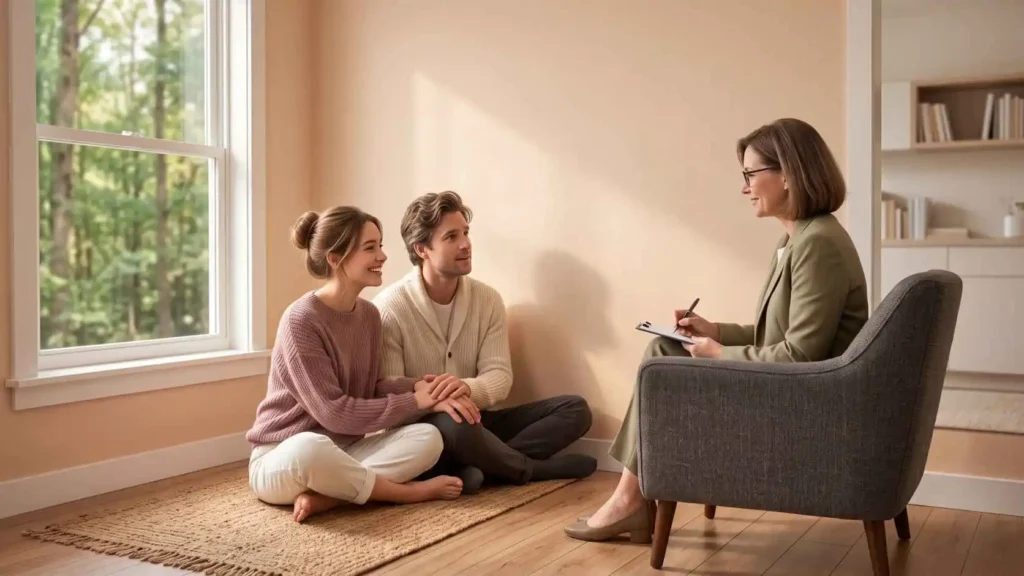
Home exercises can strengthen healthy relationships, but professional support may be helpful if you experience:
- Constant arguments
- Broken trust
- Communication that never improves
- Emotional distance
- Major life transitions
- Parenting conflicts
- Financial disagreements that keep repeating
Seeking help is a sign of commitment to the relationship, not failure.
Conclusion
Healthy relationships don’t happen by chance. They grow through small, intentional actions that build trust, understanding, and connection over time.
These couples therapy activities are simple enough to practice at home and can help you communicate better, solve problems together, and strengthen your bond. Choose one or two exercises to start with, stay consistent, and focus on progress rather than perfection.
For deeper relationship challenges, consider working with a licensed couples therapist who can provide personalized guidance and support.
Ready to take the next step in your personal growth? Explore expert services — from therapy to life coaching — available on Fiverr.
If you want to read more articles similar to Couples Therapy Activities to Build a Stronger Relationship, we recommend that you enter our psychology category.
FAQs
What is the best couples therapy exercise?
Active listening is one of the most effective exercises because it improves communication and helps partners feel heard and understood.
How often should couples do relationship exercises?
Many couples benefit from practicing one or two activities each week, along with a short daily check-in.
Can couples therapy exercises help without seeing a therapist?
Yes. Many exercises can strengthen communication and connection at home. However, serious or ongoing relationship problems may require support from a licensed couples therapist.
What activities improve emotional intimacy?
Daily check-ins, gratitude exercises, long hugs, shared goals, and technology-free date nights are excellent ways to build emotional closeness.
Do couples need to be having problems to try these exercises?
No. Many happy couples use therapy-inspired activities to maintain a healthy, supportive relationship and prevent small issues from becoming bigger ones.

I’m Waqar Hasan, a passionate psychologist and dedicated content writer.
With a deep interest in understanding human behavior, I aim to share insights and knowledge in the field of psychology through this blog.
Feel free to reach out for collaborations, queries, or discussions.
Let’s dig into the fascinating world of psychology together!